NEW GUIDE!
Everything You Ever Needed to Know About Unemployment
A Practice Owner’s Guide to Every Step of the UI Process
And what it actually costs you when a claim lands. Built for dental, optometry, veterinary, and healthcare practices that let someone go and then found out the paperwork was just getting started.
Unemployment isn't a favor you grant.
It's a benefit the state grants.
And a bill you pay.
Unlike Medicare or Social Security, employees don't pay into their own unemployment fund. You do, through FUTA and SUTA taxes. (Unless you're in Alaska, New Jersey, or Pennsylvania, then employees chip in too.)
Depending on the state, a former employee can collect anywhere from $275 to over $1,100 a week, usually for up to 26 weeks. And when the claim notice arrives, the deadline printed on it started counting from the mail date, not the day you opened the envelope. Most states give you 10 calendar days. Tennessee and Wisconsin give you seven.
Miss it, and many states enforce "employer fault" rules: you permanently lose the right to protest or appeal, even if the employee was fired for gross misconduct.
Inside the guide, you'll learn how to:
- Tell an employee from a contractor before misclassification turns into an expensive mistake
- Read the notice the state mails you, and respond before a deadline that started without you
- Answer a claim in objective, matter-of-fact language the state actually accepts
- Know when to fight a claim (and when fighting it costs more than simply losing)
- Handle the other mail: tax rate notices, audit letters, wage garnishments, disability claims
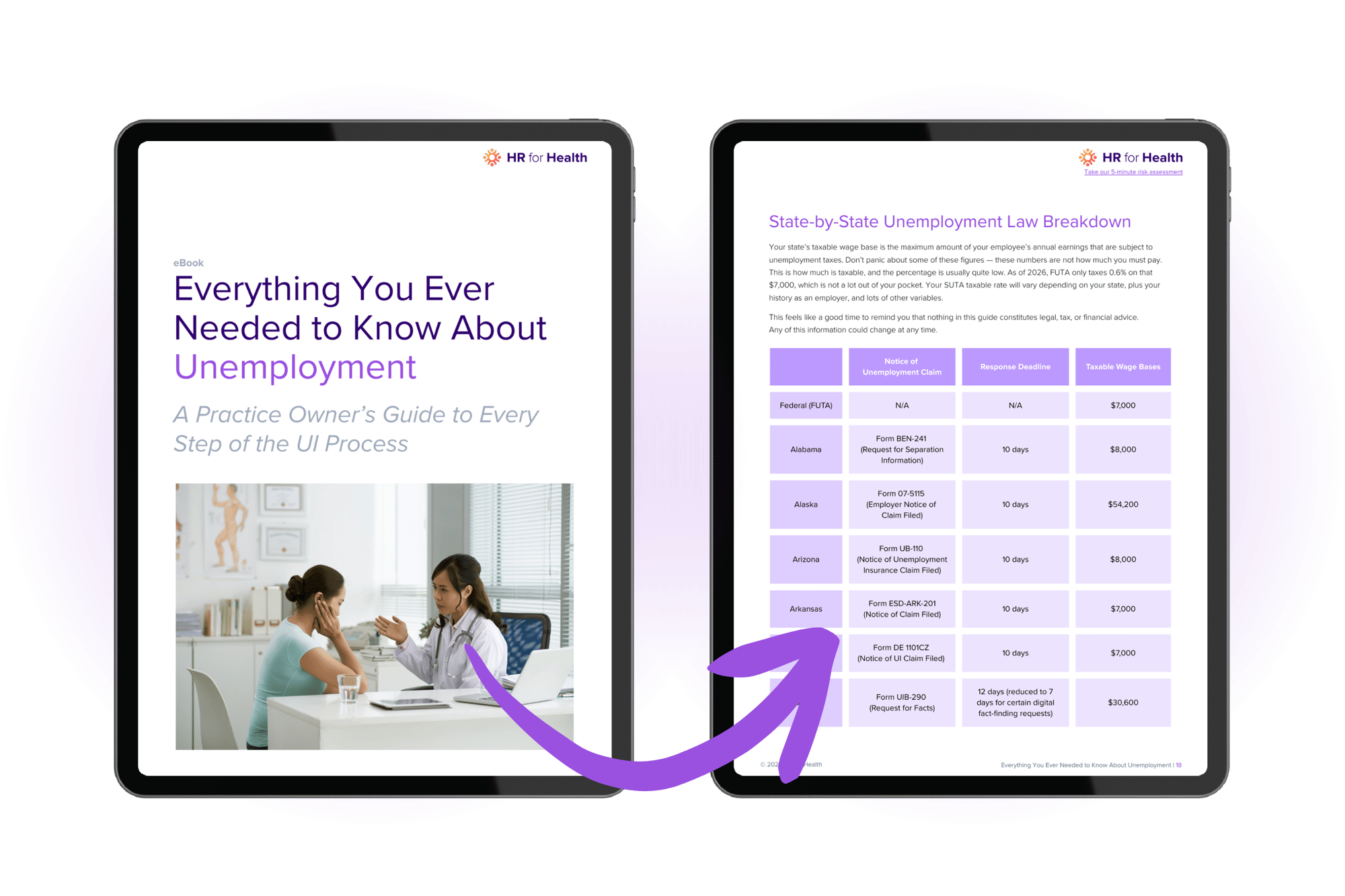
- Look up your state's form, response deadline, and taxable wage base in one chart covering all 50 states

Nothing in this guide is legal, tax, or financial advice. Think of this as an FYI so you understand how unemployment works, who may be eligible, and what your responsibilities can include.
It isn't about who was right.
It's about who wrote it down.
State referees favor documentation over testimony, every time. If you verbally warned someone three times but nothing was signed, dated, or timestamped, then as far as the state is concerned, it never happened, and the benefit of the doubt goes to the claimant.
That's not a reason to panic. It's a reason to have a process. The practices that come through claims cleanly aren't the ones with better arguments; they're the ones who documented the warning when it happened, kept the handbook current, and can produce the separation notice without digging through a filing cabinet.

You're running a practice, not a claims department. We get it.
You'd rather focus on patient care than paper trails, and that's where we come in. HR for Health keeps your documentation airtight and your practice running while you work through accommodation requests.
-
Signed, dated documentation, warnings, reviews, and separation notices stored with timestamps
-
State-specific handbooks that update themselves when the law changes, so the policy you're citing is the policy in force
-
Payroll, timekeeping, and PTO in one system, so final wages and payouts get reported right the first time
